
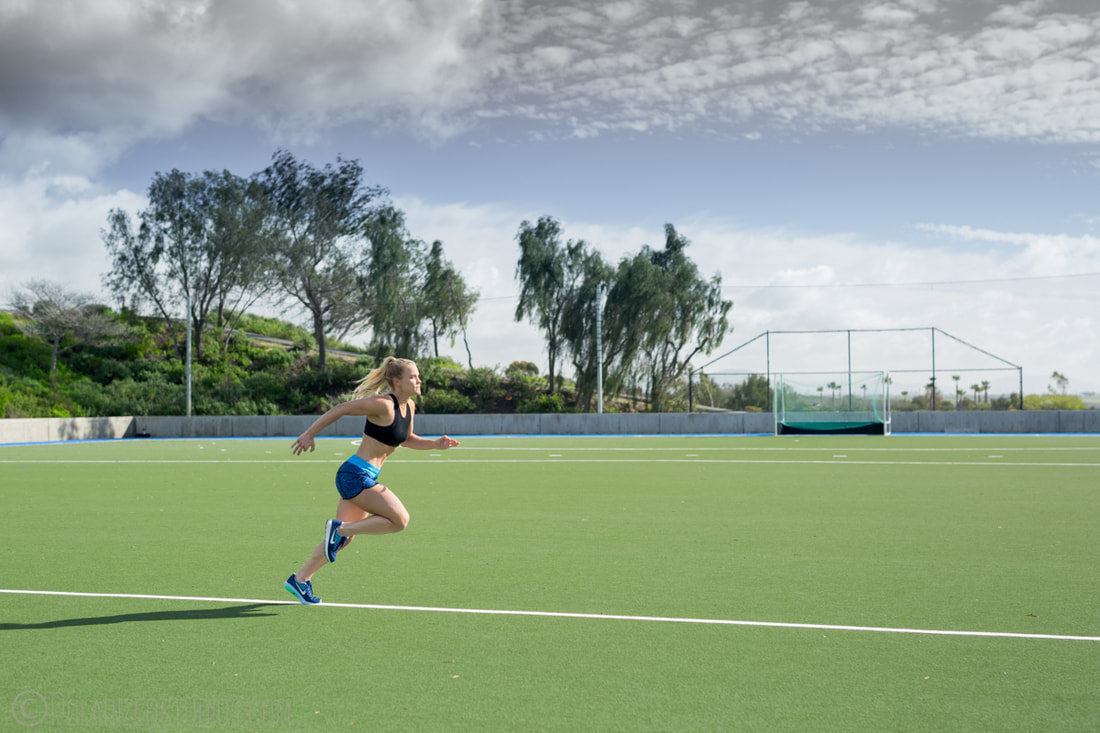
Hockey Training Tips to Improve Speed, Strength, and Performance
Ice hockey is a uniquely demanding sport that requires a rare combination of explosive skating speed, brute physical strength, elite cardiovascular endurance, and rapid-fire decision-making. Because the game is played on a low-friction ice surface at velocities exceeding twenty miles per hour, standard athletic training is insufficient. To excel on the ice, players must undergo highly specific physical conditioning that respects the biomechanical realities of the skating stride and the chaotic, high-impact nature of the sport. A comprehensive hockey development program focuses on transforming dryland training into elite on-ice performance.
Developing Explosive On-Ice Speed
Skating speed is not simply about moving your legs as fast as possible. In physics terms, speed is the product of stride length and stride frequency. To skate faster, a hockey player must maximize the amount of force they can push horizontally into the ice with every single stride while maintaining an aerodynamic, low center of gravity.
Building Lateral Power
Unlike running, which is a linear, front-to-back movement, hockey skating is predominantly lateral and diagonal. The skating stride requires an athlete to push outward and backward at roughly a forty-five-degree angle. Therefore, traditional forward-running drills will not maximize your skating potential.
To build true skating speed on dry land, athletes must prioritize lateral plyometrics. Exercises like skater jumps, where you leap explosively from one foot to the other in a sideways motion, train the hips, glutes, and thighs to produce horizontal force. Lateral box jumps and single-leg bounding also condition the nervous system to recruit muscle fibers rapidly, leading to a much more explosive first-step acceleration when recovering a loose puck or beating a defender wide.
Deep Flexion and Stride Length
A common mistake among developing hockey players is skating with an upright posture. When your hips and knees are relatively straight, your leg extension is severely truncated, resulting in a short, choppy, and inefficient stride.
Elite skaters maintain deep knee flexion, meaning their knees are bent at roughly a ninety-degree angle throughout the game. This low stance allows the leg to fully extend outwards, maximizing the contact time with the ice and generating significantly more power per stroke. To build the muscular endurance needed to hold this grueling position across a sixty-minute game, players must utilize deep goblet squats, Bulgarian split squats, and wall sits during their strength workouts.
Building Hockey-Specific Strength
Hockey strength is not measured by how much weight a player can bench press while lying flat on a bench. True hockey strength is rooted in the lower body, the core, and the stabilization of the pelvic girdle, allowing players to win battles along the boards and absorb heavy body checks safely.
Unilateral Lower-Body Development
Because skating involves pushing off with one leg while the other leg recovers underneath the body, hockey is inherently a single-leg sport. Therefore, your weight room routine should lean heavily toward unilateral training.
Single-leg exercises ensure that both limbs develop equal strength and power, erasing natural muscular imbalances that could cause a player to favor one side when turning or crossing over. Incorporating movements like walking lunges, single-leg Romanian deadlifts, and step-ups forces the smaller stabilizing muscles around the ankles, knees, and hips to fire constantly. This structural stability drastically reduces the risk of non-contact knee and groin injuries.
Rotational Core Stability
A powerful slap shot or wrist shot does not originate in the wrists or biceps. The energy for a shot is generated in the legs, transferred through the core, and released through the upper body into the stick. If a player has a weak, unstable midsection, that energy leaks out, resulting in a weak, inaccurate shot.
Furthermore, hockey players need rotational core strength to ward off opponents while protecting the puck. Training should emphasize rotational exercises using cable machines, medicine ball rotational tosses, and anti-rotation movements like the Pallof press. A rigid, powerful core allows a player to maintain their balance even when an opposing defenseman is leaning their full weight against them in front of the net.
Metabolic Conditioning for Sixty-Minute Dominance
Ice hockey is a game characterized by repeated anaerobic intervals. A typical hockey shift lasts between forty and forty-five seconds, consisting of absolute maximal effort sprints, physical collisions, and rapid changes of direction, followed by roughly two to three minutes of rest on the bench.
High-Intensity Interval Training (HIIT)
Long, slow, steady-state distance running is counterproductive for competitive hockey players. Jogging miles at a leisurely pace trains the muscles to slow down, converting explosive fast-twitch muscle fibers into endurance-focused slow-twitch fibers.
Instead, conditioning workouts must mimic the exact temporal structure of a hockey game. High-intensity interval training on an air bike, a rowing machine, or a non-motorized treadmill is ideal. For example, a player should perform thirty seconds of absolute maximal exertion followed by ninety seconds of active recovery, repeating this cycle ten to fifteen times. This approach trains the body to clear lactic acid rapidly, ensuring that your tenth shift of the game is just as fast and aggressive as your first shift.
The Aerobic Foundation
While the active parts of hockey are purely anaerobic, a strong aerobic system is still highly necessary. The aerobic system is what operates while you are sitting on the bench, working hard to replenish cellular energy stores and lower your heart rate before your next shift.
To develop this baseline engine without ruining your speed, players should engage in low-impact cardio, such as cycling or swimming, for thirty to forty-five minutes once or twice a week during the early off-season.
On-Ice Skill Performance Optimization
Physical fitness is only half of the equation; you must be able to execute technical skills while moving at maximum velocity under extreme physical pressure.
Overspeed Training for Stickhandling
Many players practice their stickhandling while standing completely still on a synthetic ice surface. While this is helpful for learning basic mechanics, it fails to prepare a player for game scenarios.
To elevate performance, players must practice stickhandling while moving at overspeed, which means skating downhill, using resistance bands, or intentionally pushing your skating velocity past your comfort zone while maintaining control of the puck. This forces the brain to automate the puck-moving process, allowing your eyes to stay up to scan the ice for open teammates and incoming defenders.
Shot Release Mechanics
In modern hockey, goaltenders are exceptionally well-trained, making it highly difficult to beat them with raw velocity alone. The key to scoring goals in today’s game is the deception and speed of your release.
Players should practice shooting the puck off the wrong foot, meaning shooting while your weight is transitioning unexpectedly, which catches the goaltender off guard. Additionally, focus on minimizing your backswing; a modern composite stick is designed to flex and snap like a bow. By pushing the stick blade hard into the ice slightly before the puck, you load the stick with potential energy, creating a lightning-fast release that leaves the goaltender zero time to react.
Frequently Asked Questions
Why do hockey players experience so many groin strains, and how can they be prevented?
The skating stride requires a violent outward pushing motion followed by an immediate inward recovery pull. This repetitive recovery movement places immense stress on the adductor muscles of the inner thigh. To prevent strains, players must regularly perform eccentric groin exercises, like Copenhagen side planks, alongside targeted mobility work to ensure the hip joints can move through a full range of motion without impinging the surrounding soft tissues.
What is the specific benefit of utilizing slide boards during off-ice training sessions?
Slide boards are slick plastic mats that allow an athlete to wear specialized booties and slide side-to-side, perfectly replicating the lateral push and recovery mechanics of ice skating. This tool builds the specific muscular endurance of the hip abductors and adductors on dry land, making it an invaluable asset for conditioning when ice time is restricted.
How does the flex of a hockey stick directly alter a player’s shooting performance?
The flex rating indicates how many pounds of force are required to bend the stick by one inch. If a stick is too stiff for a player’s body weight and upper-body strength, they will be unable to bend the shaft, losing the whip effect and reducing shot velocity. Conversely, a stick that is too soft will bend excessively, destroying accuracy and control during heavy shots.
Should hockey players perform heavy overhead lifting exercises like standard military presses?
While shoulder strength is important, heavy overhead pressing should be approached with caution due to the unique posture of hockey players. Continuously holding a stick and hunching forward in a skating stance can lead to tight chest muscles and rounded shoulders. Forcing heavy weights overhead with poor shoulder mobility can cause shoulder impingement. Rear delt flyes, face pulls, and landmine presses are often safer, highly effective alternatives.
What role does footwork and agility ladder training play in improving a player’s skating?
Agility ladders do not directly increase raw skating power, but they are exceptional for developing foot speed, cognitive coordination, and mind-muscle connectivity. Fast footwork drills train the nervous system to move the feet rapidly, which translates directly to better agility during tight turns, escapes, and crossing over in the neutral zone.
Why is active recovery immediately following a hockey game so vital for performance?
A high-intensity hockey game creates a massive accumulation of metabolic waste products, like lactic acid, within the muscle tissues. Sitting still in the locker room directly after a game allows that waste to pool in the legs, leading to severe stiffness and delayed onset muscle soreness. Spending ten minutes on a stationary bike at a light pace keeps the blood flowing, flushing out toxins and kickstarting the cellular repair process.
Related Posts

The Best Way To Play Field Hockey
