
Tennis Equipment Innovations That Are Changing the Game
Tennis is a sport deeply rooted in history and custom, but beneath its pristine surface lies a world driven by intense technological evolution. From the early days of wooden frames and flannel trousers, the sport has transformed into a high-octane discipline where modern science dictates performance. Today, structural engineering, materials science, and digital analytics converge to reshape how players interact with the ball. These advancements are not restricted to the professional tour. They are fundamentally redefining power, spin, control, and injury prevention for athletes at every level of the game.
The Transformation of Racket Frames and Materials
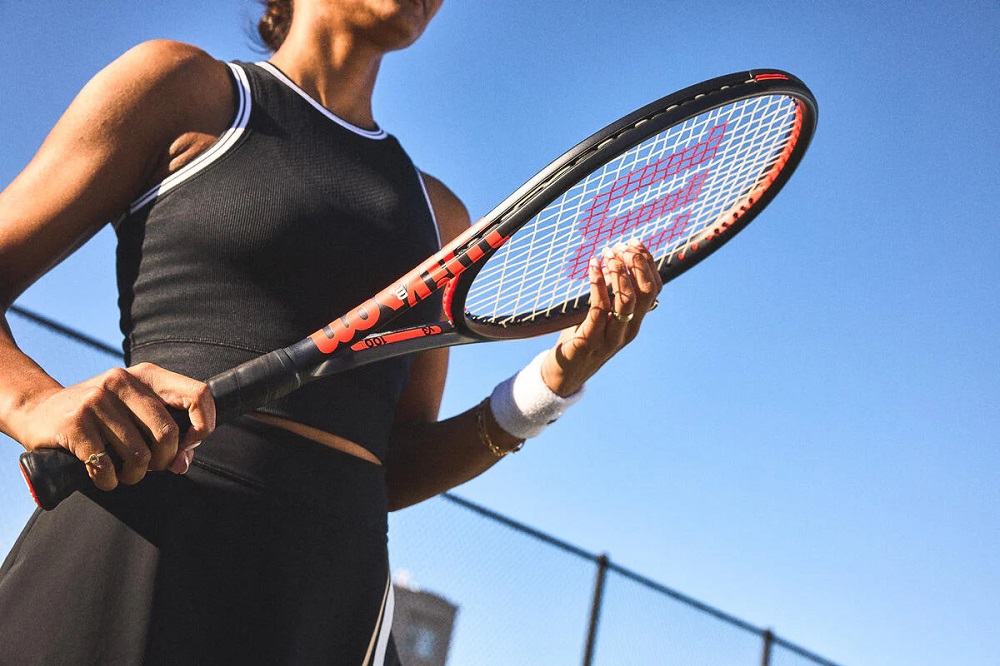
The evolution of the tennis racket frame represents the most visible shift in the sport’s history. The transition from heavy, flexible wood to stiff aluminum in the late 1960s was revolutionary, but it was the introduction of carbon fiber composites in the 1980s that permanently altered the biomechanical demands of the game. Modern engineering has pushed far beyond basic graphite, introducing highly complex composite materials that behave intelligently under physical stress.
Graphene and Lightweight Power Distribution
One of the most impactful material innovations is the integration of graphene into racket frames. Graphene is an incredibly strong, ultra-lightweight form of carbon that is only one atom thick. By implementing graphene into the throat and shaft of the racket, engineers can drastically reduce the weight in the middle of the frame.
This saved weight is strategically relocated to the tip of the hoop and the bottom of the handle. This uneven weight distribution optimizes the racket’s swing weight and mass distribution without increasing its overall physical weight. For the player, this translates into a higher moment of inertia, meaning they can generate substantially more racquet head speed and heavy kinetic energy with the exact same amount of physical exertion.
Auxetic Technology and Ball Feedback
The sensory connection between a player’s hands and the tennis ball is vital for control and precision. The latest breakthrough addressing this connection involves auxetic design. Auxetic materials possess a unique property that defies conventional physics: when stretched along their length, they become wider rather than narrower. Conversely, when compressed, they contract across their entire structure.
In a tennis racket, auxetic carbon structures are embedded directly into the bridge or throat area. When a ball strikes the string bed, the frame experiences sudden, massive impact forces. The auxetic components react by expanding or contracting in real-time, stabilizing the frame and dampening harsh, high-frequency vibrations. This provides a highly clean, uniform feel at impact, offering maximum feedback to the player’s hands regardless of whether the ball was struck perfectly in the sweet spot or slightly off-center.
Modern String Technology and Spin Mechanics
While the frame provides the mechanical architecture, the strings are the only part of the equipment that makes actual contact with the ball. For decades, natural gut made from cow intestines was the gold standard due to its elite elasticity and tension retention. However, the dawn of the twenty-first century saw a chemical revolution that completely altered baseline play: the rise of co-polyester strings.
Polyester and the Snap-Back Phenomenon
Co-polyester strings are stiff, durable monofilaments that offer much less elasticity than natural gut or nylon synthetic strings. Instead of absorbing power, polyester strings resist stretching, allowing players to swing at absolute maximum velocity without fear of launching the ball past the opponent’s baseline.
The true secret behind polyester strings is the mechanical concept of lateral snap-back. Modern polyester strings are heavily coated with low-friction lubricants, such as silicone or Teflon, or shaped into geometric profiles with sharp edges (pentagonal, hexagonal, or heptagonal). When an athlete hits the ball with an upward swinging path, the main strings slide easily across the cross strings, temporarily displacing themselves out of alignment.
As the ball leaves the string bed, the displaced strings violently snap back into their original position. This rapid elastic snap-back imparts massive, high-velocity angular rotation to the tennis ball, generating the devastating topspin that characterizes the modern baseline game.
Hybrid Stringing Configurations
To balance the stiff, harsh nature of polyester with the comfortable, responsive feel of traditional materials, players increasingly utilize hybrid stringing. This technique involves installing a durable, spin-friendly polyester string in one direction (usually the mains) and a soft, resilient natural gut or multifilament string in the other direction (the crosses). This custom fusion allows players to access modern spin mechanics while shielding their joints from the repetitive shock that causes tendon damage.
Footwear and Kinetic Energy Return
Tennis requires constant, violent multidirectional movement. An elite player must execute a brutal sequence of explosive lateral sprints, sudden slides, and immediate decelerations on unyielding surfaces. To support these extreme physical stresses, modern tennis footwear has evolved into highly specialized pieces of biomechanical engineering.
Advanced Midsole Compounds
Historically, tennis shoes relied on heavy rubber and basic foam to absorb impact forces. Today, footwear manufacturers utilize advanced thermoplastic polyurethane and proprietary nitrogen-infused foam compounds within the midsole.
These modern materials are designed to cushion the intense downward force of a hard landing while storing that energy cellularly. As the player pushes off the ground to change direction, the midsole snaps back into shape, releasing that stored potential energy back into the foot. This kinetic energy return increases explosive first-step acceleration and reduces lower-body muscular fatigue over long, multi-hour matches.
Adaptive Outsole Patterns and Sliding Mechanics
The global dominance of clay-court baseline sliding has heavily influenced hard-court footwear design. Modern outsoles feature dual-zone traction patterns. The inner edge of the shoe incorporates high-density, high-traction rubber to provide instant grip during a change of direction, while the outer edge features smoother, wider tread patterns designed to allow controlled sliding on abrasive hard courts. This calculated slide capability reduces the sudden braking forces exerted on a player’s ankles and knees, preventing severe joint rolls and muscle strains.
Smart Equipment and Digital Integration
The digital revolution has successfully embedded itself within physical tennis hardware, transforming how athletes track, analyze, and optimize their on-field performance.
Sensor-Embedded Hardware
Modern rackets can now be ordered or retrofitted with tiny, high-tech sensors embedded directly into the butt cap of the handle. These lightweight sensors contain three-axis accelerometers and gyroscopes capable of tracking thousands of data points per session.
The sensor measures the precise speed of the racquet head, the exact angle of rotation, the frequency of contact, and the specific location of every single ball strike across the string bed. This data is transmitted wirelessly via Bluetooth to an external smartphone application, providing the player and coach with an objective, data-driven breakdown of their stroke mechanics, shot selection, and consistency.
Smart Tennis Balls and Court Analytics
Innovation has also extended into court environments. Portable digital camera tracking arrays can now turn any standard municipal tennis court into a high-tech data hub. By pairing these visual tracking systems with pressure-sealed smart balls that contain specialized tracking microchips, players can instantly access precise data regarding ball velocity, spin rates, bounce height, and net clearance, bringing elite-level sports science to recreational players.
Frequently Asked Questions
Why do modern pressurized tennis balls lose their bounce even when they are not being used?
Pressurized tennis balls are manufactured with an internal core that contains highly compressed air or nitrogen gas, which exerts an outward pressure against the rubber shell to create bounce. Because the natural rubber shell is inherently porous at a microscopic level, that compressed gas steadily leaks out over time, even while the balls are sitting still inside a regular bag. This causes the ball to lose its internal pressure and become soft or dead within a few weeks of opening the protective tube.
What is the structural purpose of a racket’s swing weight compared to its static weight?
Static weight is simply the total weight of the racket when placed flat on a scale. Swing weight measures how heavy the racket actually feels to an athlete when it is being swung dynamically through the air. Swing weight is heavily determined by how that total mass is distributed across the frame; a racket with more mass located in the head will possess a much higher swing weight and generate more power, even if its static weight is identical to a head-light frame.
How does the specific string pattern density alter the trajectory and behavior of a tennis shot?
Rackets generally feature either an open string pattern (such as 16 main strings by 19 cross strings) or a dense, closed pattern (such as 18 mains by 20 crosses). An open pattern features larger square openings between the strings, which allows the strings to deflect more, providing a higher launching trajectory and massive spin potential. A closed pattern features a tight, dense grid that limits string movement, offering much higher directional control and string durability at the expense of easy spin generation.
Why do manufacturers use different colors, like pink and neon yellow, for modern tennis balls?
The choice of optic yellow or high-visibility pink is purely rooted in human visual tracking and broadcasting science. Extensive laboratory testing revealed that these specific fluorescent hues sit directly at the peak of the human eye’s natural color sensitivity spectrum under both bright sunlight and artificial stadium lighting. This allows the human brain to process the moving object’s speed, rotation, and trajectory substantially faster than it can with traditional white or dark-colored balls.
How do carbon fiber plates inside tennis shoes protect a player’s feet from injury?
Modern high-end tennis shoes often feature a rigid carbon fiber shank or plate embedded within the arch region of the midsole. This plate acts as a structural bridge that prevents the shoe from twisting excessively or bending abnormally along the arch during violent lateral movements. By stabilizing the midfoot, the carbon plate ensures that the structural load is distributed evenly across the foot, drastically reducing the occurrence of plantar fasciitis and ankle inversion injuries.
What is the mechanical benefit of using an overgrip on top of a racket’s base grip?
An overgrip is a thin, specialized tape wrapped over the original leather or synthetic base grip of the handle. Overgrips are manufactured with intense moisture-wicking or tacky polyurethane coatings designed to absorb palm sweat instantly. This prevents the handle from twisting or slipping out of a player’s hands during high-velocity impacts, allowing the athlete to maintain a relaxed, light grip pressure without sacrificing physical control of the frame.
Related Posts

Learn About Essential Tennis Equipment

How To Pick Tennis Equipment
