
The Importance of Leadership in Rugby Team Success
Rugby is often described as the ultimate team sport. It is a game of high physical impact, intricate tactical choreography, and continuous fluid decision-making where fifteen players must act as a single, cohesive unit. Because rugby allows no forward passing, is played without timeouts, and requires continuous play even after violent physical contact, it places an extraordinary demand on the psychological and operational structure of a squad. In such an intense environment, raw athletic talent and meticulous playbook design are completely insufficient on their own. The true differentiator between a mediocre squad and a championship-winning team is the quality, structure, and execution of its leadership.
The Unique Tactical Landscape of Rugby Leadership
To appreciate why leadership carries such a heavy premium in rugby compared to other field sports, one must examine the specific laws governing the game. In sports like American football, coaches exercise complete, play-by-play tactical control from the sidelines, sending in specific formations and scripts during frequent stoppages.
Rugby possesses no such luxury. Once the referee blows the whistle to signal the kickoff, the coaching staff is relegated to the grandstands, legally barred from directly intervening in the flow of the match. The game runs continuously for eighty minutes, interrupted only by brief set-piece situations like scrums, lineouts, or penalty kicks.
This operational reality places the entirety of tactical adaptation onto the shoulders of the players on the pitch. If an opposing defensive line is choking off standard passing lanes, or if a sudden shift in atmospheric weather turns the field into a muddy morass, the team cannot wait for halftime to adjust. Leaders must read the defensive alignment, assess the energy levels of their squad, and implement macro-strategic shifts in real-time. A failure in player leadership results in immediate tactical paralysis, as individual players begin acting independently rather than maintaining a unified approach.
The Multi-Layered Leadership Architecture
Unlike sports that rely on a single, vocal captain to command the entire roster, an elite rugby squad implements a decentralized, multi-layered leadership model often referred to as a leadership group. This architecture splits responsibilities across specialized positions to prevent decision fatigue and ensure absolute clarity during chaotic passages of play.
The Team Captain: The Cultural Anchor
The designated team captain holds a highly unique structural position in rugby. They are the sole individual legally permitted to speak with the match referee during play. This communication requires an exceptional level of emotional intelligence and diplomatic poise.
A captain who berates a referee or expresses visible frustration will inevitably alienate the official, resulting in a stricter interpretation of marginal infractions against their team. Conversely, a measured, respectful captain can gently influence the referee’s focus, securing a subtle competitive advantage during highly contested breakdowns. Beyond referee management, the captain serves as the emotional thermometer of the squad, delivering stabilizing instructions when the team faces intense pressure and injecting urgency when intensity drops.
The Tactical Generals: Halfbacks and Fly-Halves
While the team captain holds overarching institutional authority, the practical, minute-by-minute tactical execution is driven by the halfbacks, specifically the scrum-half and the fly-half. These positions act as the strategic spine of the team:
-
The Scrum-Half: Positioned directly at the base of every breakdown, scrum, and lineout, the scrum-half dictates the absolute tempo of the game. They choose whether to rapidly distribute the ball to the backline to exploit an overlapping boundary or to deploy the forwards to grind out yards through short-range contact.
-
The Fly-Half: Serving as the primary playmaker, the fly-half possesses the territorial kicking and passing vision. They assess the positioning of the opposing backfield sweepers and decide whether to launch a tactical kick into open space or orchestrate an expansive passing maneuver.
The Forward Leaders: Packs and Set-Pieces
The forward pack, consisting of the eight heaviest players on the field, operates within a brutal, high-friction environment. This micro-society requires its own specialized leadership, usually managed by an experienced lock or back-row forward.
This individual is solely responsible for calling the lineout codes, which are intricate, pre-planned signals that dictate exactly where the ball will be thrown and which players will lift the jumper. In the exhausting, claustrophobic environment of a contested scrum, the forward leader provides the technical and verbal synchronization required to ensure all eight players shove in absolute unison.
Building a Culture of Collective Accountability
True leadership in rugby extends far beyond the eighty minutes spent on the match field. It is forged across grueling pre-season training blocks, early morning video analysis sessions, and strict adherence to off-field performance habits. Elite rugby organizations understand that leadership cannot be a top-down dictatorship; it must be a culture of shared ownership.
When a leadership group establishes clear, non-negotiable standards for physical preparation, punctuality, and video study, those behaviors rapidly permeate the entire roster. Younger, less experienced players look to senior leaders to understand how to conduct themselves. If a senior international superstar is seen diving onto loose balls in training or sprinting at full capacity during a mundane conditioning drill, it eliminates any excuse for junior players to slacken their effort.
This collective accountability is what builds defensive resilience. In rugby, goal-line defense is entirely driven by psychological resolve. When a team is forced to make twenty consecutive tackles on their own goal line while physically exhausted, physical conditioning ends and sheer leadership begins. Leaders maintain defensive line integrity by constantly communicating assignments, praising crucial tackles, and refusing to allow a single link in the defensive chain to break.
Navigating Adversity and Crisis Management
A rugby match is a chaotic sequence of shifting momentum. Even the most dominant teams will experience periods where they concede consecutive penalties, lose critical possession, or suffer a sudden red card that leaves them short-handed. It is during these specific windows of crisis that leadership manifests its maximum value.
Ineffective leadership reacts to adversity with internal panic, finger-pointing, and visual expressions of defeat, such as dropped shoulders or hands placed on hips. This negative energy rapidly destabilizes the rest of the team, leading to a compounding spiral of errors and disciplinary infractions.
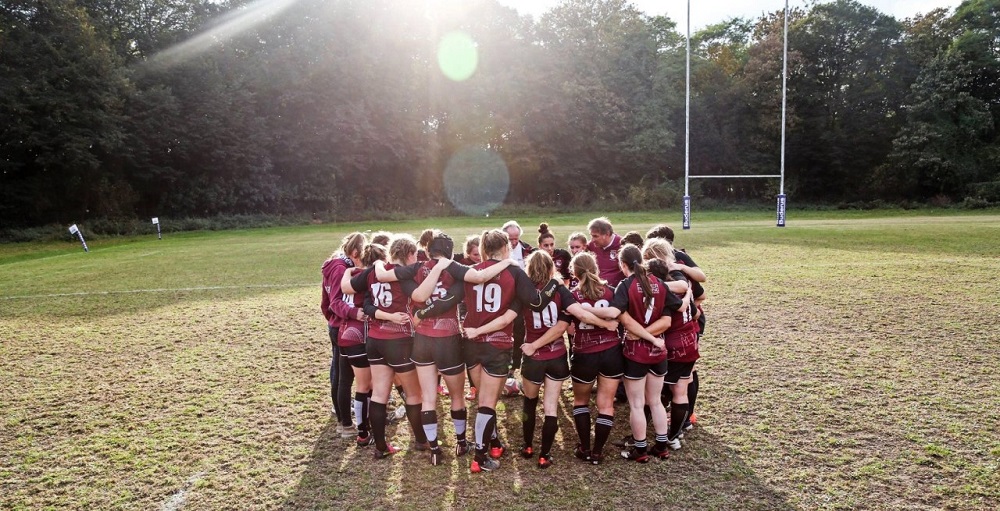
Elite leaders respond to crisis by instantly narrowing the team’s cognitive focus. Rather than worrying about a mounting scoreboard deficit, they gather the players in a tight huddle during a stoppage and establish a single, immediate operational goal, such as securing the next kickoff or executing a flawless cleanout at the upcoming ruck. By breaking a massive, overwhelming crisis down into a series of small, highly achievable physical tasks, leaders alleviate anxiety, restore confidence, and systematically claw back the momentum of the match.
Frequently Asked Questions
Why is it critical for a rugby captain to maintain a calm demeanor when talking to a referee?
In rugby, the referee holds absolute authority, and their subjective interpretation of complex breakdown laws heavily dictates the flow of the game. If a captain approaches a referee with aggression or argumentative body language, it creates an adversarial dynamic. A calm, analytical captain asks precise, clarification-seeking questions, which builds mutual respect and ensures the official remains objective when making critical, marginal calls later in the match.
What is the specific role of a vice-captain within a rugby squad structure?
The vice-captain acts as a crucial sounding board for the main captain and usually commands the half of the field that the captain does not occupy. For example, if the team captain is a forward playing in the scrum, the vice-captain is often a backfield player. This geographic split ensures that both the heavy forwards and the fast backs have a direct, localized leadership voice during fluid passages of play.
How do rugby leaders manage the integration of young players into a high-pressure environment?
Leaders integrate younger players by assigning them clear, highly specific roles that minimize cognitive overload, while actively offering public validation for positive actions on the field. Off the field, experienced leaders frequently mentor younger players during film review sessions, breaking down complex tactical structures to build their confidence and accelerate their processing speed.
How does the lack of timeouts in rugby alter the way a captain must lead compared to basketball or football?
Because there are no timeouts, a rugby captain cannot rely on a coach to call a huddle, draw up a new play, or settle the team’s nerves during an opposing scoring run. The captain must act completely on their own initiative, utilizing natural breaks in play, such as injuries or penalty resets, to quickly align the squad and implement necessary tactical changes on the fly.
What does it mean when a rugby team has a player-led leadership group instead of a single captain?
A player-led leadership group means that instead of relying on one single individual to make every decision, a core committee of four to five senior players from various position groups meets regularly with the coaching staff. This group collectively shares the burden of maintaining team discipline, planning tactical variations, and driving the cultural standards of the club both on and off the pitch.
Why is leadership considered just as important for defensive play as it is for attacking strategies?
Attacking play often relies on individual flair, speed, and creative instinct. Effective defense, however, is an entirely unselfish task that requires supreme discipline, perfect spatial alignment, and continuous physical sacrifice. Leaders drive defensive excellence by constantly shouting alignment instructions, tracking moving attackers, and setting an aggressive physical example that inspires teammates to maintain their positioning under extreme fatigue.
Related Posts
A Brief History from the Bet on Rugby

5 Variations Between Rugby and Rugby League
