How To Prepare For A More Rewarding Training Session
A good training session starts before you step onto the mats. Anyone planning Muay Thai Pattaya training will get far more from the experience by arriving with realistic expectations, the right mindset and a basic understanding of how physically demanding a proper session can be.
Know What You Want From The Session
People train for different reasons. Some want a hard fitness session, some want to learn proper striking technique, and others are interested in experiencing a traditional combat sport while travelling. None of those reasons is wrong, but it helps to know what you are aiming for before the class begins.
A beginner should not expect to master everything in one session. The first class is often about understanding stance, balance, basic strikes and how to move without becoming tense. More experienced students may want to sharpen timing, improve pad work, build conditioning or work on specific weaknesses. The clearer the goal, the easier it is to judge whether the session has been useful.
It is also important to be honest about fitness. Muay Thai can be demanding even for people who are already active. Heat, travel fatigue and unfamiliar movements can make the session feel harder than expected. Starting sensibly is much better than pushing too aggressively and losing form halfway through.
Listen Carefully During The Basics
The early part of a session can feel simple, but it often contains the details that make the rest of training safer and more effective. Stance, guard, foot position and hip movement may not feel exciting at first, but they affect every punch, kick, knee and defensive movement that follows.
Beginners sometimes focus too much on power. They want to hit pads hard or throw big kicks straight away. Good training usually starts with control. A balanced kick delivered correctly is more valuable than a powerful one thrown with poor posture. The same applies to punches. Speed and strength matter, but only once the movement is sound.
For experienced students, returning to basics is still useful. Small adjustments can make a big difference. A coach may correct the angle of a foot, the position of a hand or the way weight transfers through a strike. These details are often what separate casual effort from real improvement.
Respect The Pace Of The Gym
Every gym has its own rhythm. Warm-ups, shadow boxing, pad rounds, bag work, conditioning and cool-downs may be structured differently depending on the coaches and the level of the class. Rather than trying to control the session, it is better to observe, listen and follow instructions carefully.
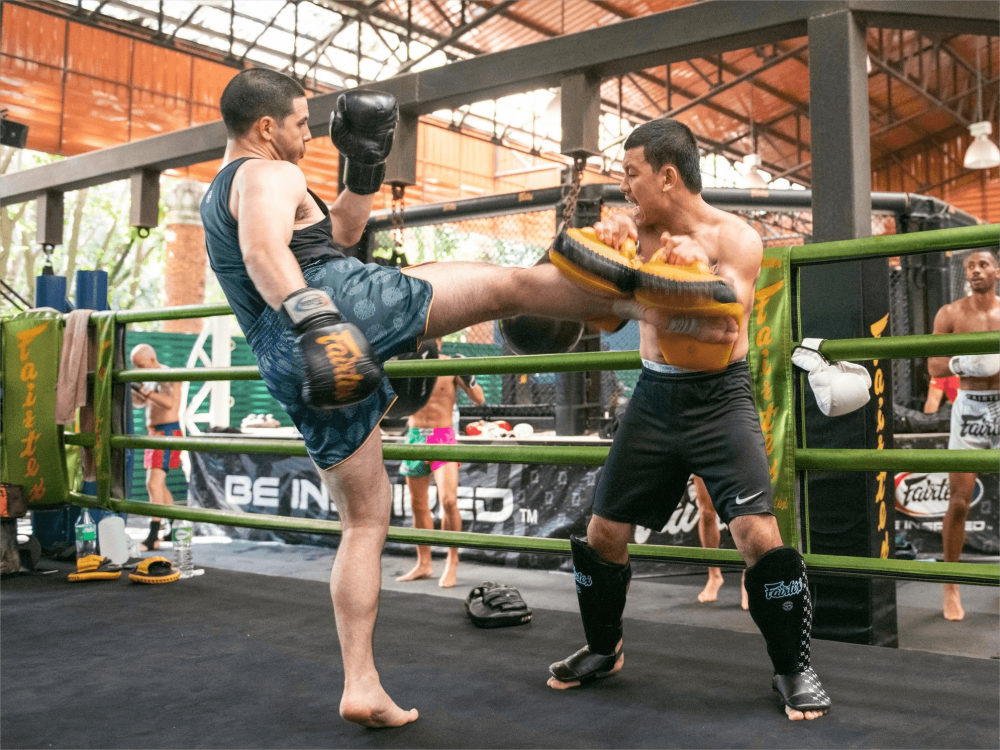
Respect also matters when training with others. Pad holders, sparring partners and coaches all need proper attention. If you are unsure what to do, ask. If you are working with a partner, control your strikes and match the drill. Muay Thai is intense, but it should not be careless.
Hydration and recovery should be taken seriously too. Training in Thailand can feel different because of the heat and humidity. Drinking water, pacing yourself and taking instruction properly will help you get through the session without unnecessary strain.
Aim To Leave With One Clear Improvement
A worthwhile session does not need to change everything. You might leave with a better understanding of how to turn your hip on a kick, how to keep your guard tighter, or how to breathe properly during pad rounds. One clear improvement is enough to make the training valuable.
The best approach is to train with effort but without ego. Listen closely, accept corrections and pay attention to how the body feels. Whether you are training once during a trip or building a longer routine, a prepared mindset will help you get more from the experience and enjoy the session properly.