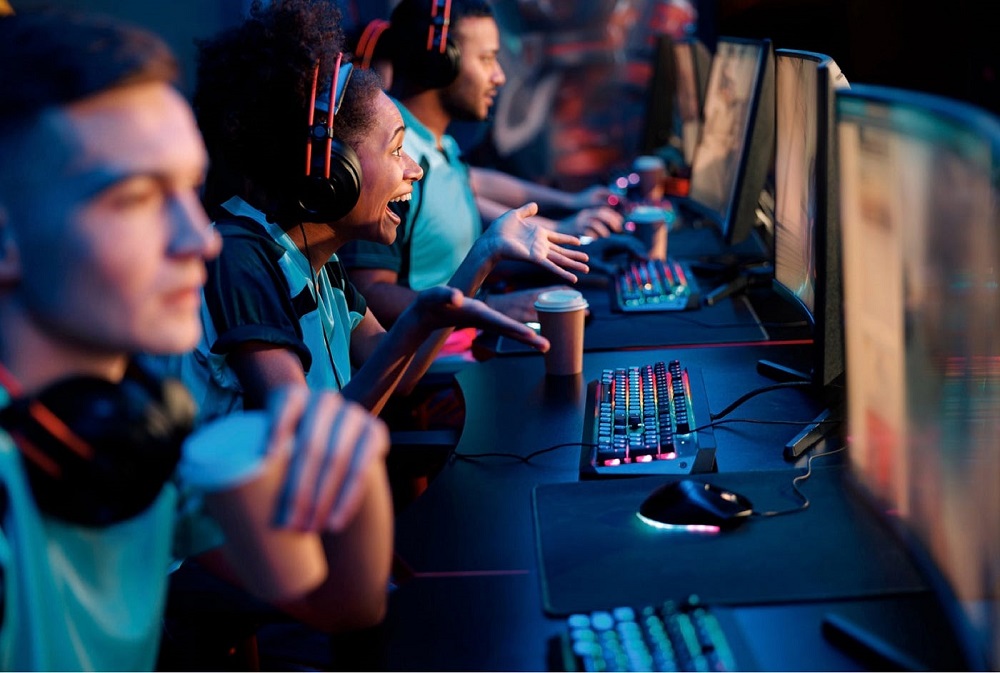
How Multiplayer Games Are Building Global Communities
The landscape of human interaction has undergone a profound transformation. Where communities were once defined strictly by geographical proximity, neighborhood borders, or physical meeting spaces, the digital age has shattered these boundaries. At the absolute forefront of this cultural shift is the multiplayer gaming industry. No longer a solitary pastime confined to dark basements, video games have evolved into sprawling, interconnected social ecosystems. Every single day, hundreds of millions of individuals log into virtual worlds, not merely to seek entertainment, but to find connection, build deep friendships, and participate in complex global societies.
The Evolution of Connected Play
To understand how modern multiplayer games function as community builders, one must trace their technological and structural evolution. The earliest multiplayer experiences were localized, requiring players to sit on the same couch, plugging controllers into a single console, or hauling heavy desktop computers to a central warehouse for a local area network party. These gatherings were highly intimate but severely limited by physical constraints.
The widespread adoption of high-speed broadband internet in the early 2000s changed everything. The introduction of Massively Multiplayer Online Role-Playing Games allowed thousands of players to inhabit the same persistent virtual space simultaneously. For the first time, an individual in Chicago could forge an alliance with a player in Tokyo and another in London to accomplish a shared objective.
As voice communication software, cloud computing, and cross-platform play became standardized, the friction of online gaming vanished. Cross-platform capabilities mean that a player on a home console can seamlessly join a match with a friend playing on a personal computer and another utilizing a mobile device. This technical unification laid the groundwork for gaming to transition from a niche subculture into a universal language that transcends language, socioeconomic status, and national identity.
Mechanics of Cooperation and Shared Objectives
Human beings form deep bonds through shared hardship and collaborative problem-solving. Multiplayer games are meticulously designed around these exact psychological triggers, forcing individuals to cooperate to achieve success.
Collaborative Problem-Solving
In high-stakes cooperative modes, success cannot be achieved through individual skill alone. Complex multiplayer scenarios require a sophisticated division of labor. One player might occupy a defensive role to absorb damage, another focuses entirely on healing teammates, while others execute strategic offensives.
This interdependence forces players to develop high levels of trust and clear communication protocols. Individuals must learn to read their teammates’ behavioral patterns, predict their movements, and provide constructive feedback in real-time. The intense feeling of triumph experienced after overcoming a difficult in-game challenge with a group of strangers creates a powerful psychological bond, often serving as the foundation for long-term relationships.
Structural Social Organizations
Modern multiplayer titles incorporate complex organizational structures that mimic real-world communities. These structures provide players with a sense of identity, duty, and shared history:
-
Guilds and Clans: These are persistent, player-governed organizations that can range from a dozen close friends to thousands of international members. Guilds often feature formal hierarchies, including leaders, officers, recruiters, and general members. They manage collective resources, schedule weekly events, and establish internal codes of conduct.
-
In-Game Economies: Virtual worlds frequently feature intricate marketplaces where players trade goods, manufacture specialized equipment, and establish complex trading networks. These economic systems require negotiation, contract fulfillment, and reputation management, fostering a high level of social infrastructure.
-
Mentorship Programs: Many game communities naturally establish organic or structural onboarding systems where experienced veteran players volunteer their time to guide newcomers, teaching them mechanical nuances and integrating them into the broader social circle.
Virtual Worlds as Modern Third Places
Sociologists have long discussed the vital importance of the “third place”—a social environment separate from the two primary environments of home and the workplace. Historically, third places took the form of churches, cafes, bowling alleys, or community centers. As physical third places face steady declines in contemporary urban environments, multiplayer gaming spaces have rushed to fill the void.
Games have transitioned into digital town squares. In many massive online titles, players log in with zero intention of participating in core combat or completing narrative quests. Instead, they gather in designated non-combat zones, virtual taverns, or player-owned housing sectors simply to hang out.
These spaces host a massive array of emergent social activities. Players organize virtual music festivals where real-world disc jockeys stream live sets into the game engine. They stage elaborate fashion shows to display rare cosmetic equipment, hold massive in-game memorial services for deceased community members, and engage in casual political debates. The virtual avatar becomes a complete extension of the self, allowing individuals to express their identity freely in a safe, communal environment that is entirely unburdened by physical appearance or localized societal expectations.
Bridging Cultural and Geopolitical Divides
One of the most remarkable aspects of global gaming communities is their unique ability to foster cross-cultural empathy. In a standard multiplayer lobby, players are matched together based on their skill levels or regional server connection, rather than their nationality, ethnicity, or religious beliefs.
Within these lobbies, individuals from nations historically entangled in political or military conflict regularly find themselves placed on the exact same team, fighting for a common digital objective. By working together closely, sharing laughs, and communicating through voice chat, players are exposed to the basic humanity of individuals they might otherwise only view through the biased lens of geopolitical media.
Furthermore, gaming communities serve as highly effective informal language learning environments. To coordinate complex strategies, players are highly motivated to pick up phrases, slang, and vocabulary from their foreign teammates. This constant, casual cultural exchange erodes xenophobia and expands the global perspective of younger generations, creating a deeply connected global populace that views the world not as a collection of isolated nations, but as a unified network of players.
Frequently Asked Questions
What role do modern chat and community platforms play in supporting gaming networks outside of the games themselves?
External communication platforms act as the vital connective tissue that keeps gaming communities alive when players are away from their screens. These platforms allow clans and guilds to establish permanent text channels, organize event calendars, share strategic guides, and chat casually throughout the workday. This continuous contact shifts the relationship from a casual interaction into a persistent, daily friendship that exists independently of whether the game client is actively running.
How do multiplayer games support individuals who struggle with social anxiety in physical environments?
Virtual environments provide a highly controlled, low-stakes arena for social interaction. Players who feel overwhelmed by the intense visual and auditory cues of face-to-face communication can interact through an avatar, relying on text chat or structured voice commands. This removes the immediate pressure of physical judgment, allowing individuals with social anxieties to express themselves confidently, develop communication skills, and build meaningful relationships at their own comfortable pace.
What is emergent gameplay, and how does it contribute to the growth of unique online cultures?
Emergent gameplay refers to situations where players utilize a game’s mechanics in creative ways that were never explicitly intended or programmed by the original software developers. For example, players might invent completely new role-playing games, create complex political systems within a sandbox world, or establish informal guard forces to protect new players. This creative freedom allows distinct, highly specific subcultures, laws, and mythologies to develop within individual servers, deepening the community’s shared identity.
How do global gaming communities mobilize to impact the physical world during crises?
Because gaming communities possess highly sophisticated communication networks and a strong sense of shared identity, they can mobilize with immense speed. Players frequently organize charity live streams, internal in-game item auctions, and community tournaments to raise millions of dollars for disaster relief, medical research, or humanitarian aid. These efforts demonstrate that the camaraderie developed in virtual worlds can translate directly into tangible, positive change in physical society.
How do developers handle toxic behavior to protect the integrity of online communities?
Game studios utilize a multifaceted approach to curb toxic behavior and maintain welcoming environments. This includes deploying advanced machine learning algorithms capable of analyzing text and voice chat for harassment in real-time, establishing robust player reporting mechanics, and designing automated systems that reward positive, collaborative behavior. Additionally, many communities rely heavily on player-selected moderators who manually enforce established codes of conduct within specific servers or guilds.
Why do some players form stronger emotional attachments to digital gaming friends than localized acquaintances?
Digital friendships are often built entirely on shared passions, mutual values, and intense collaborative experiences, rather than the mere convenience of living on the same street or attending the same school. When players spend hundreds of hours communicating deeply, overcoming difficult strategic challenges, and supporting one another through virtual hardships, they develop a profound psychological intimacy that can easily surpass the casual bonds formed through proximity-based relationships.